Types of Propellers
Fixed-Pitch Propellers (FPP)
A fixed-pitch propeller (FPP) is a propeller whose pitch angle cannot be changed during operation. FPPs are the simplest form of propeller, serving as the traditional basis for propeller research and development. They have a wide range of applications in marine propulsion, balancing simplicity and efficiency for various scenarios.
- Durability: Fewer moving parts make FPPs more robust and less prone to mechanical failure.
- Cost-Effective: Generally cheaper to manufacture and maintain due to being an industry standard and its simple design.
- Efficiency: In steady operating conditions, FPPs can be optimized for high efficiency.
- Flexibility: Less adaptable to changing speed and load conditions, potentially leading to less efficient operation outside the optimized range.
- Manoeuvrability: Reduced ability to control thrust direction and magnitude compared to controllable-pitch propellers (CPP).
Controllable-Pitch Propellers (CPP)
A Controllable-Pitch Propeller (CPP) is a type of propeller where the pitch angle of the blades can be adjusted during operation. This flexibility allows for better performance across a range of operating conditions, enhancing both maneuverability and efficiency.
Check the sample model to see how a fully-parametric controllable pitch propeller can be set up with the advanced propeller workflow in CAESES.
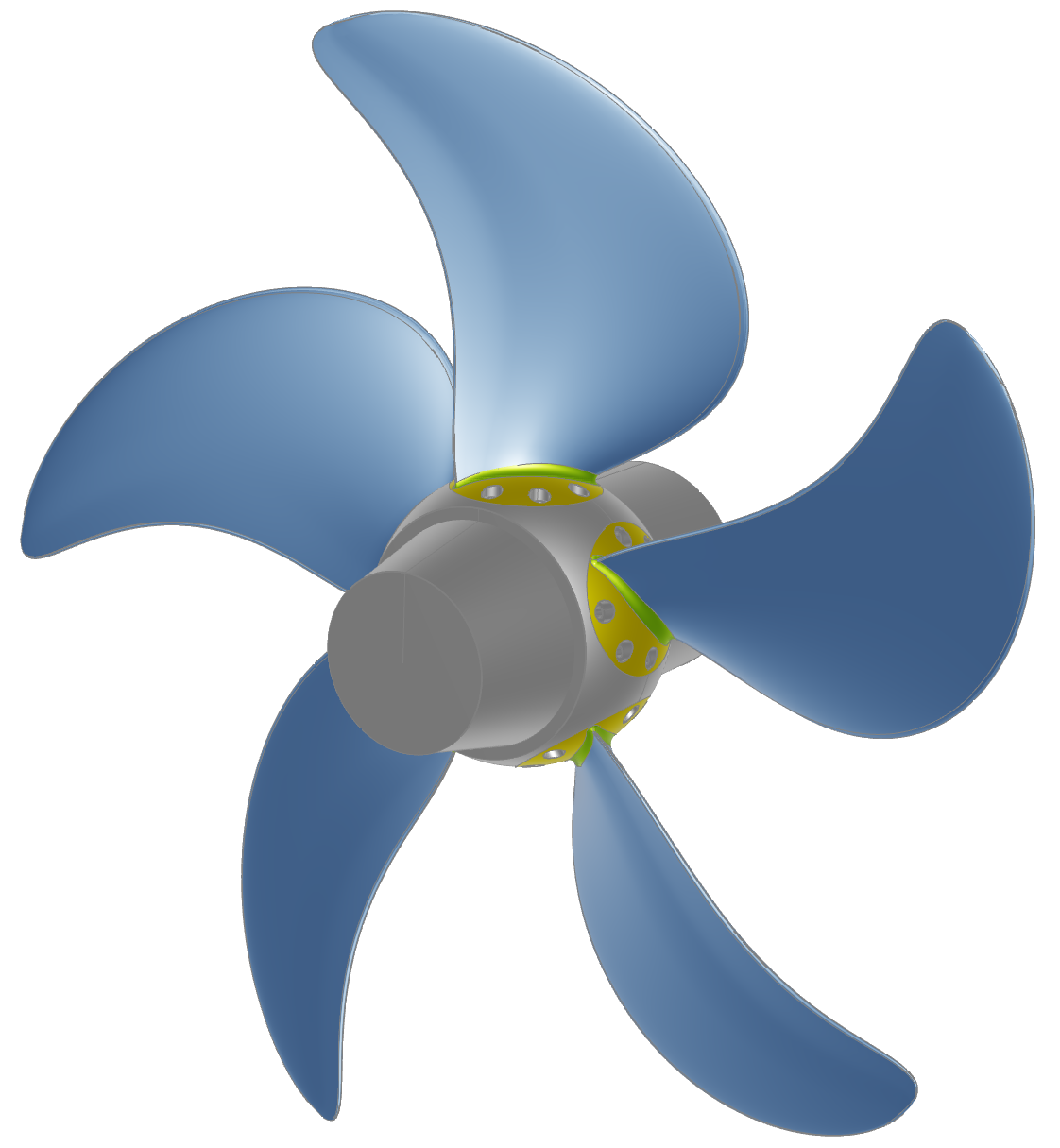
- Flexibility: Adaptable to varying speed and load conditions, optimizing performance and fuel efficiency.
- Manoeuvrability: Improved control over thrust direction and magnitude, beneficial for docking, maneuvering and dynamic positioning.
- Efficiency: Can maintain optimal performance over a wider range of operating conditions.
- Complexity: More moving parts lead to increased mechanical complexity and potential for failure.
- Cost: Generally more expensive to manufacture, install and maintain compared to fixed-pitch propellers.
Advanced Propulsion Systems
Ducted Propellers
A ducted propeller is a type of propeller encased within a duct. This configuration enhances thrust and efficiency, particularly at lower speeds, making it well-suited for tugs, fishing vessels, offshore support vessels.
- Increased Thrust: The duct or nozzle increases the effective thrust by accelerating water flow through the propeller.
- Cavitation Reduction: The duct can help reduce cavitation, which is the formation of vapor bubbles that can cause damage and reduce efficiency.
- Protection: The duct provides physical protection to the propeller blades, reducing the risk of damage from debris or grounding.
- Complexity: More complex design compared to traditional open propellers, leading to higher manufacturing and maintenance costs.
- Drag: The duct adds extra drag at higher speeds, potentially reducing efficiency in high-speed operations.
- Weight: Adds additional weight to the propulsion system, which can be a drawback for some vessels.
Podded and Azimuth Propulsors
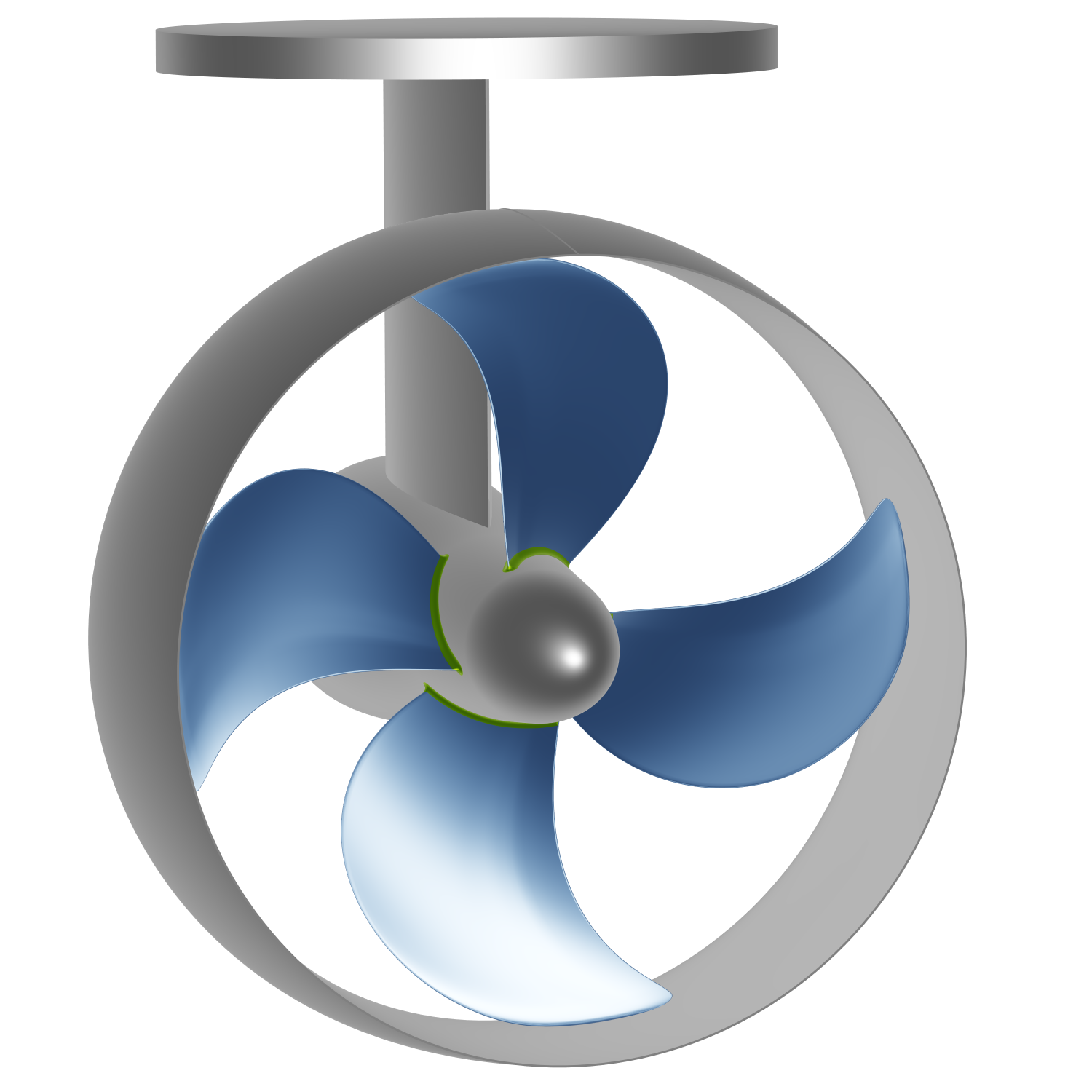
Azimuth and podded propulsors are advanced marine technologies. Azimuth propulsors allow 360-degree rotation with internal mechanical drives, while podded propulsors use external pods with electric motors and typically have four blades. Podded systems require space for the motor or shaft in the strut if a gearbox is used. If a podded propeller has a nozzle, the blades feature an extended chord length at the ends. These systems are efficient, commonly used in cruise ships and icebreakers.
Check the sample model to see how a fully-parametric pod azimuth propeller can be set up with the advanced propeller workflow in CAESES.
- Maneuverability: Both systems offer precise control over thrust direction, aiding in docking, dynamic positioning and harbor maneuvers.
- Efficiency: Podded propulsors, with their electric drive systems, offer higher efficiency and reduced noise levels compared to azimuth propulsors.
- Flexibility: Azimuth propulsors are flexible for retrofitting into existing hull designs, while podded propulsors provide flexibility in propulsion system layout.
- Complexity: Both systems are more complex to design, install and maintain due to integrated propulsion and steering components.
- Cost: Initial costs for podded propulsors can be higher due to their electric propulsion systems and specialized bearing arrangements.
- Vulnerability: Podded propulsors, being external, are more vulnerable to damage from debris or grounding compared to azimuth propulsors housed within the hull.
Rim-driven Thruster
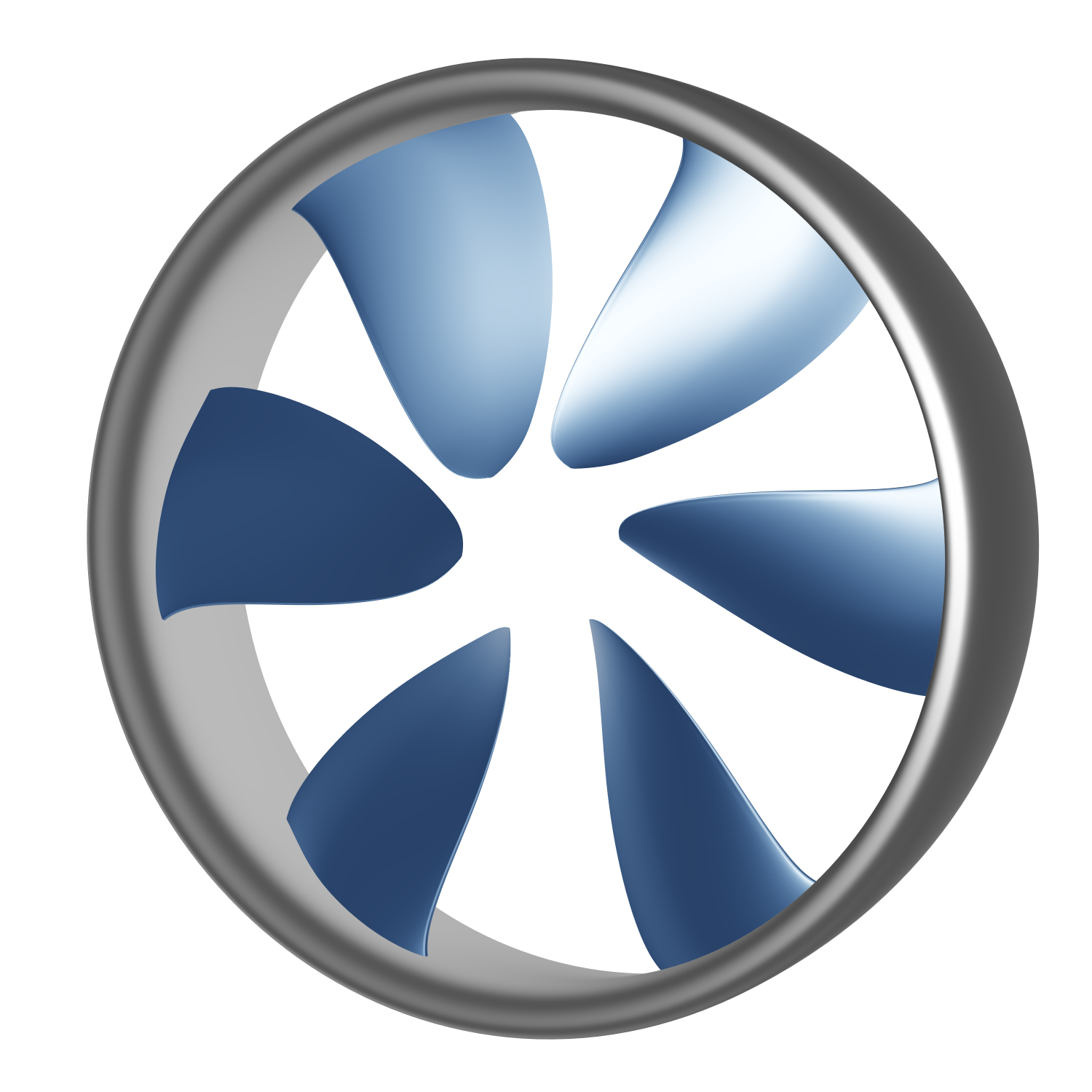
Rim-driven thrusters (RDP) are advanced electric propulsion units for ships, commercially viable due to recent advances in DC motor controller technology. Unlike conventional marine propellers, they do not use a central hub. Instead, the blades are mounted on an outer ring, which forms the rotor of an electric motor, surrounded by a ring-shaped stator for torque. The entire unit operates watertight and submerged.
Check the sample model to see how a fully-parametric rim-driven thruster can be set up with the advanced propeller workflow in CAESES.
- Maneuverability: The design allows for precise thrust direction control, enhancing vessel maneuverability.
- Quiet Operation: The electric drive and submerged components result in quieter operation compared to traditional propellers.
- Cavitation Reduction: The distributed force across the outer ring minimizes cavitation, leading to smoother and more efficient propulsion.
- Complexity: The design and manufacturing are more complex, requiring specialized technology and expertise.
- Cost: Higher initial costs and maintenance requirements due to the advanced technology and precision engineering involved.
- Power Limitations: Typically available in specific power ranges, which may limit their application to certain vessel types.
Contra-Rotating Propellers
Contra-rotating propellers utilize two coaxial propellers rotating in opposite directions. They recover rotational energy from the slipstream, enhancing propulsion efficiency compared to single-screw systems.
Check the sample model to see how a fully-parametric contra-rotating propeller can be set up with the advanced propeller workflow in CAESES.

- Torque Balance: Ensures stable maneuverability by effectively balancing torque reaction.
- Compact Design: Achieves higher thrust without increasing propeller diameter, suitable for vessels with draft limitations.
- Complexity: Design, manufacturing and maintenance are complex and require specialized expertise.
- Hydrodynamic Interactions: Interaction between the forward and aft propellers can lead to hydrodynamic challenges, including flow interference and cavitation, necessitating careful design considerations.
- Limited Application: Mechanical complexities restrict their use in larger merchant ships with traditional line shafting systems.
Specialized Propellers
Tip-Rake Propellers
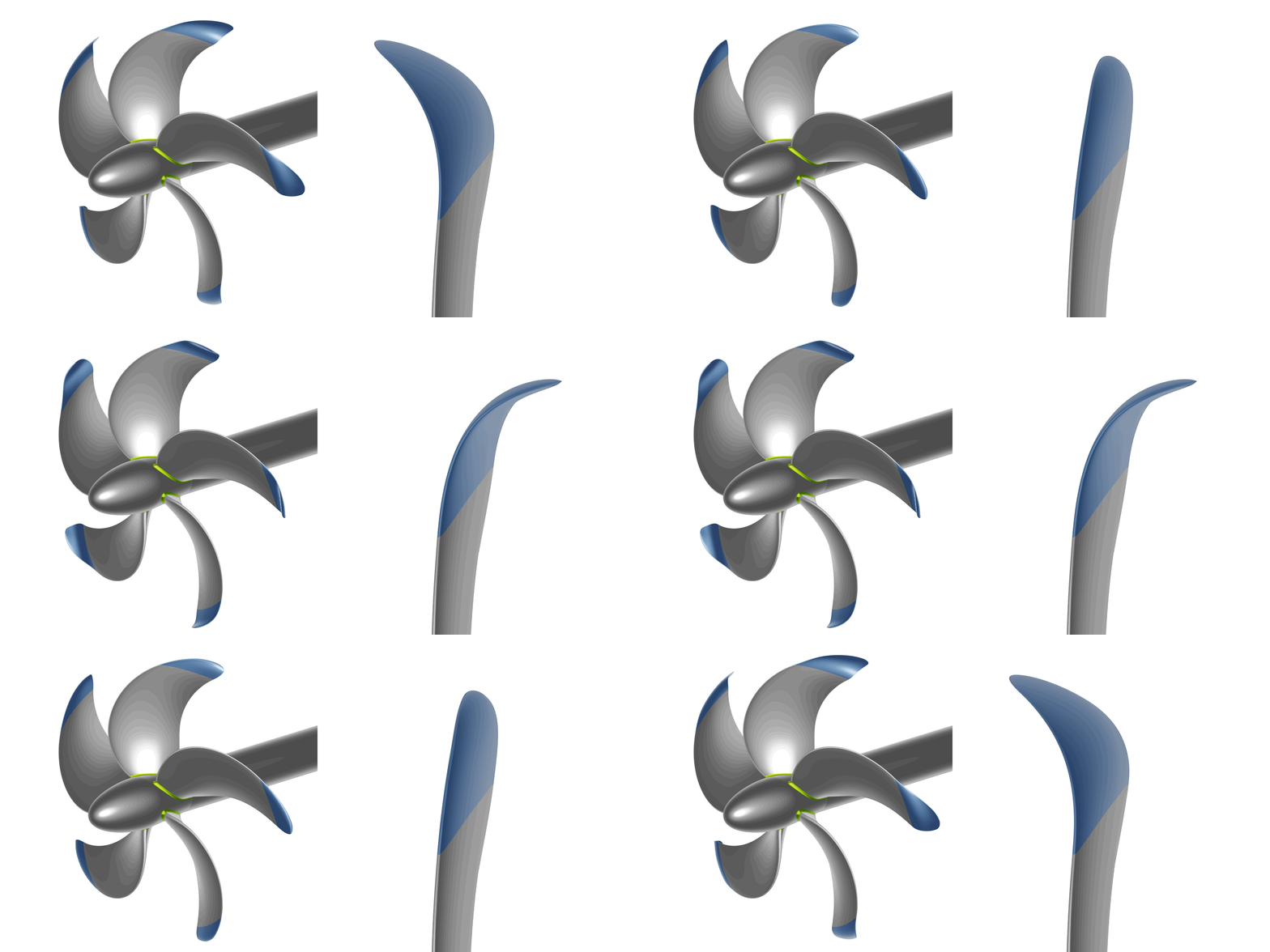
Tip-rake propellers feature blades with a distinct rake angle at the tip, either on the pressure or suction side. This design aims to improve performance by influencing the flow of water around the blade tips, which can be particularly beneficial in various marine propulsion applications.
Check the sample model to see how a fully-parametric tip-rake propeller can be set up with the advanced propeller workflow in CAESES.
- Reduced Tip Vortex: The rake at the blade tip helps to reduce the formation of tip vortices, which can improve overall efficiency and reduce drag.
- Improved Efficiency: By minimizing tip vortex and optimizing water flow, these propellers can offer better thrust and fuel efficiency.
- Enhanced Performance: Particularly effective in high-speed applications where managing tip flow is crucial for maintaining performance.
- Complexity: The design and manufacturing of tip-rake propellers can be more complex, potentially leading to higher production costs.
- Hydrodynamic Issues: The rake at the blade tip may introduce unique hydrodynamic challenges, such as increased susceptibility to cavitation under certain conditions.
- Reduced Effectiveness: Tip-rake propellers may be less effective in low-speed applications compared to conventional blade designs.
Surface Piercing Propellers
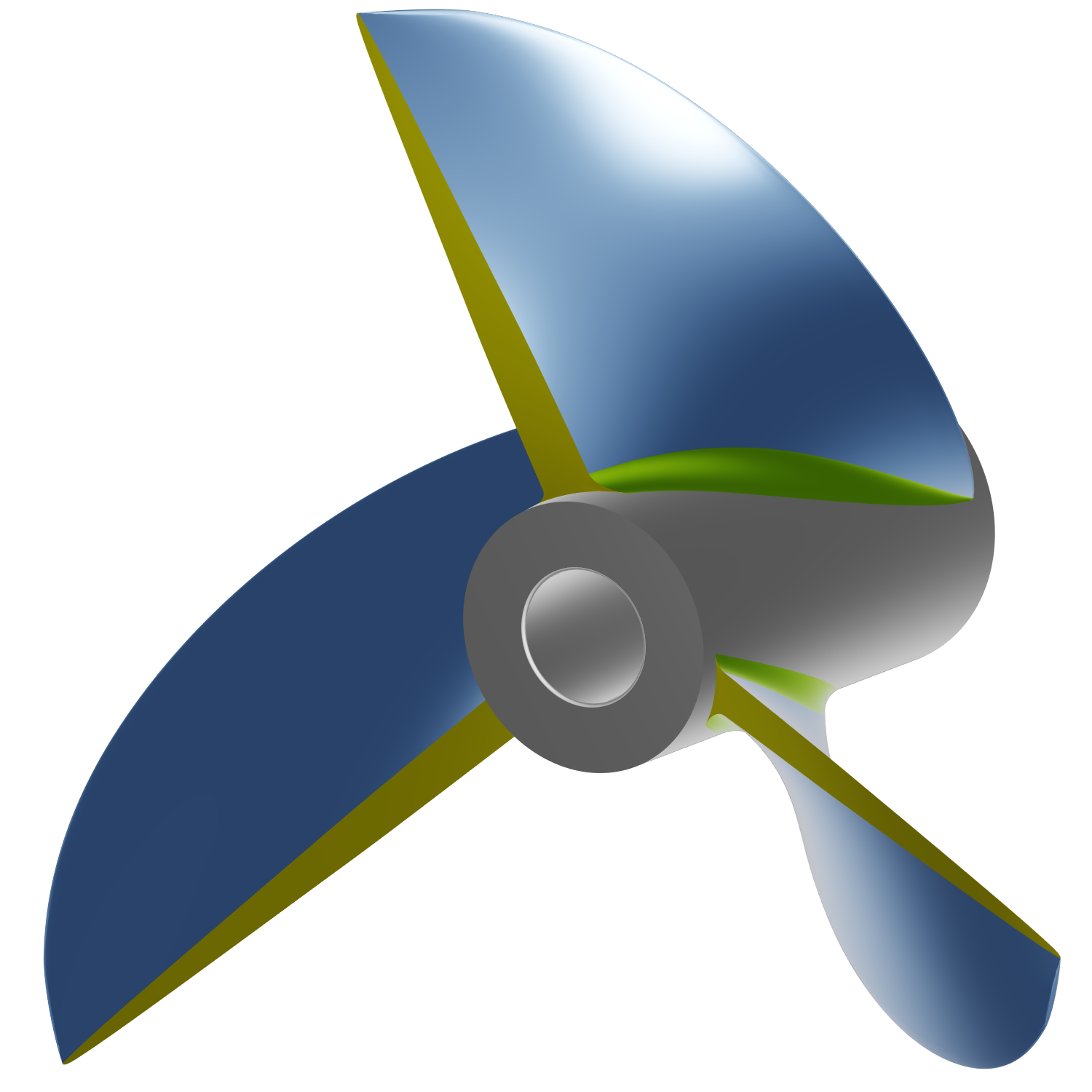
Surface-piercing propellers are specifically designed for applications where the propeller blades operate partially above the water surface and the blade has a blunt trailing edge (TE), as shown in the figure below. They are specialized for high-speed marine propulsion, particularly in conditions where maintaining propulsion efficiency is challenging. Typically used in applications where speeds can reach around 100 knots.
Check the sample model to see how a fully-parametric surface-piercing propeller can be set up with the advanced propeller workflow in CAESES.
- Structural integrity and durability: Crucial as these propellers operate in harsh conditions with blades entering and exiting the water surface at high speeds, creating significant stress.
- Cavitation Reduction: Manages the water and air flow better, minimizing cavitation.
- Ventilation Control: Provides a more consistent flow of water and air, enhancing overall performance and stability.
- Efficiency: Maintain reasonable propulsion efficiency even under challenging hydrodynamic conditions.
- High Speed Capability: Designed to achieve high speeds, up to approximately 100 knots, due to reduced drag and efficient blade design.
- Shallow-Water Operation: Suited for vessels navigating in shallow waters where fully submerged propellers may encounter depth limitations.
- Cavitation & Ventilation Issues: Prone to cavitation and ventilation due to the formation of air cavities near the blade surfaces.
- Vibrations: The transition between partially ventilated and fully ventilated conditions can cause significant vibratory forces, impacting operational stability and structural integrity.
- Limited Application: The use of surface-piercing propellers is more specialized compared to conventional propeller designs.
Toroidal Propellers
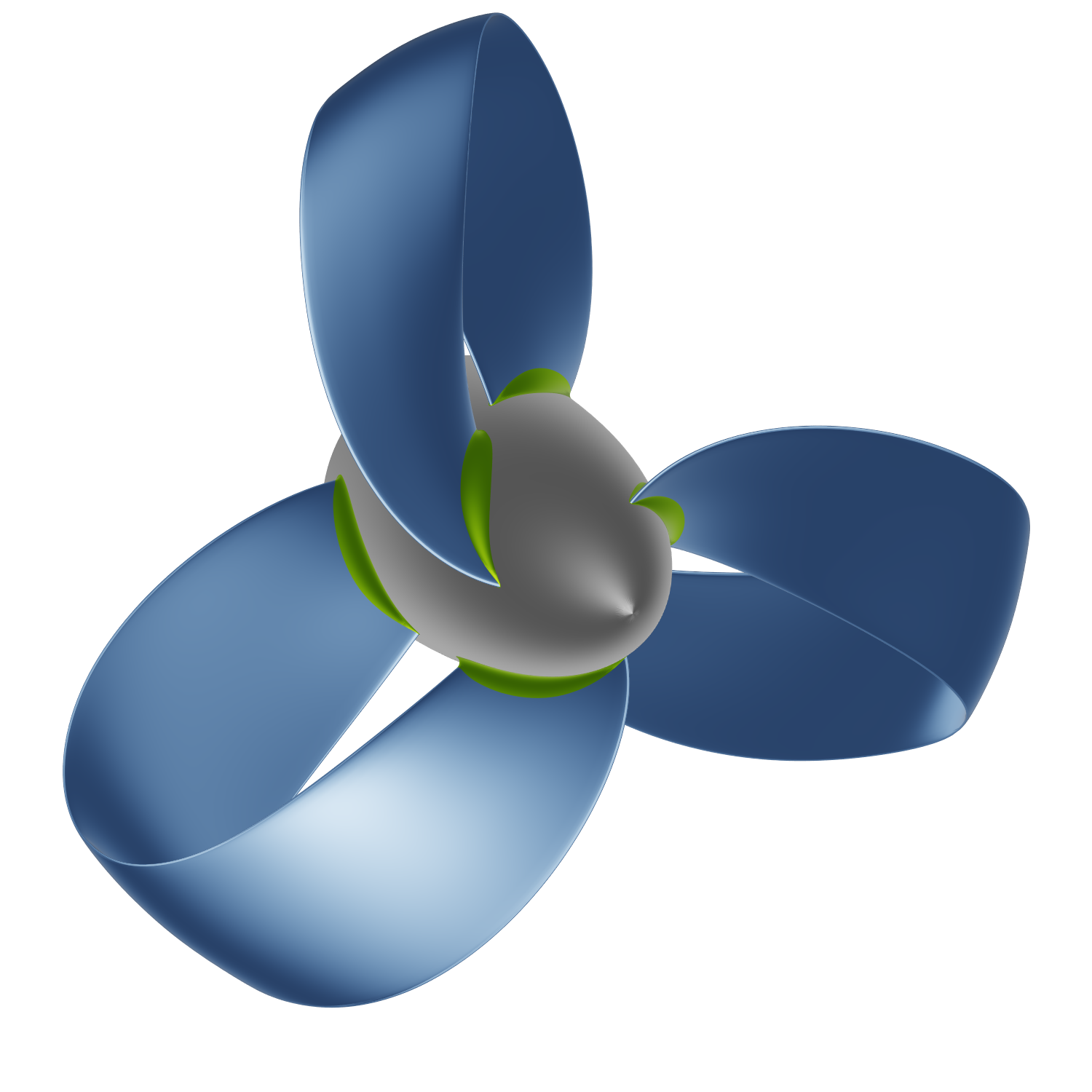
Toroidal propellers — also called looped-blade or ring propellers — feature blades that arc forward and reconnect at the tip to form a continuous closed loop around the hub. Unlike conventional open-screw propellers, this design eliminates the free blade tip and the tip vortex it generates, which is the primary source of cavitation and underwater radiated noise in traditional designs.
Applications where the quiet, low-vibration characteristics are especially valued include:
- Autonomous underwater vehicles (AUVs) and remotely operated vehicles (ROVs) — low radiated noise is critical for underwater sensing
- Unmanned surface vessels (USVs) and maritime drones — reduced acoustic signature and smoother thrust delivery
- Small craft and leisure boats — less cavitation means lower vibration and reduced blade erosion
- Aerial drones — the looped-blade geometry reduces the tonal blade-tip noise that dominates conventional rotor acoustics
The trade-off is increased wetted surface area at the blade tips, which generates minimal lift while adding drag and torque requirements. This makes toroidal propellers most effective at moderate speeds and generally less competitive in high-speed open-water conditions.
The CAESES Toroidal Propeller Workflow is purpose-built to handle the geometric complexity of the looped blade, guiding you through two coordinated center surfaces with matching pitch, rake, skew, and chord distributions to deliver a fully-parametric, CFD-ready model. Follow the tutorial or download the sample model below.
- Quiet Operation: Significantly quieter compared to traditional propellers, reducing noise pollution in maritime environments.
- Enhanced Efficiency: The toroidal shape and closed-loop blade design can achieve comparable thrust to traditional propellers and, in some applications, offer improved efficiency.
- Durability: The robust design of toroidal propellers, featuring closed-loop blades and a circular hub, enhances durability and resilience against tough operating conditions.
- Complex Manufacturing: The intricate toroidal shape requires specialized manufacturing techniques, leading to higher production costs.
- Hydrodynamic Challenges: The closed loop at the tip adds surface area where minimal lift is generated, increasing torque requirements and reducing open water efficiency.
- Limited Application: The application of toroidal propellers is limited compared to conventional propeller designs.